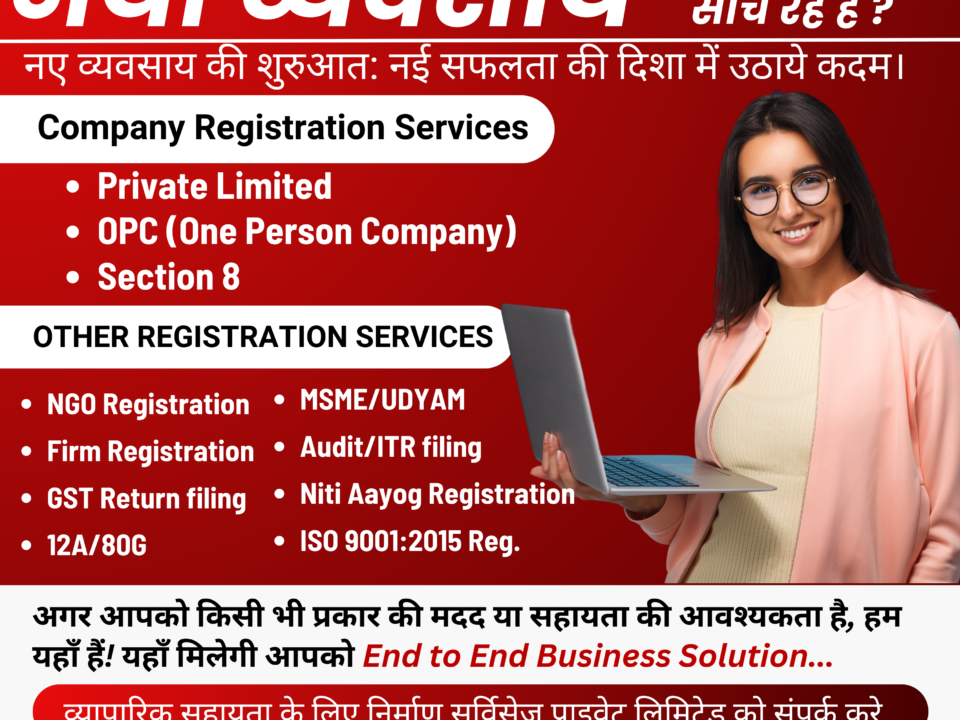



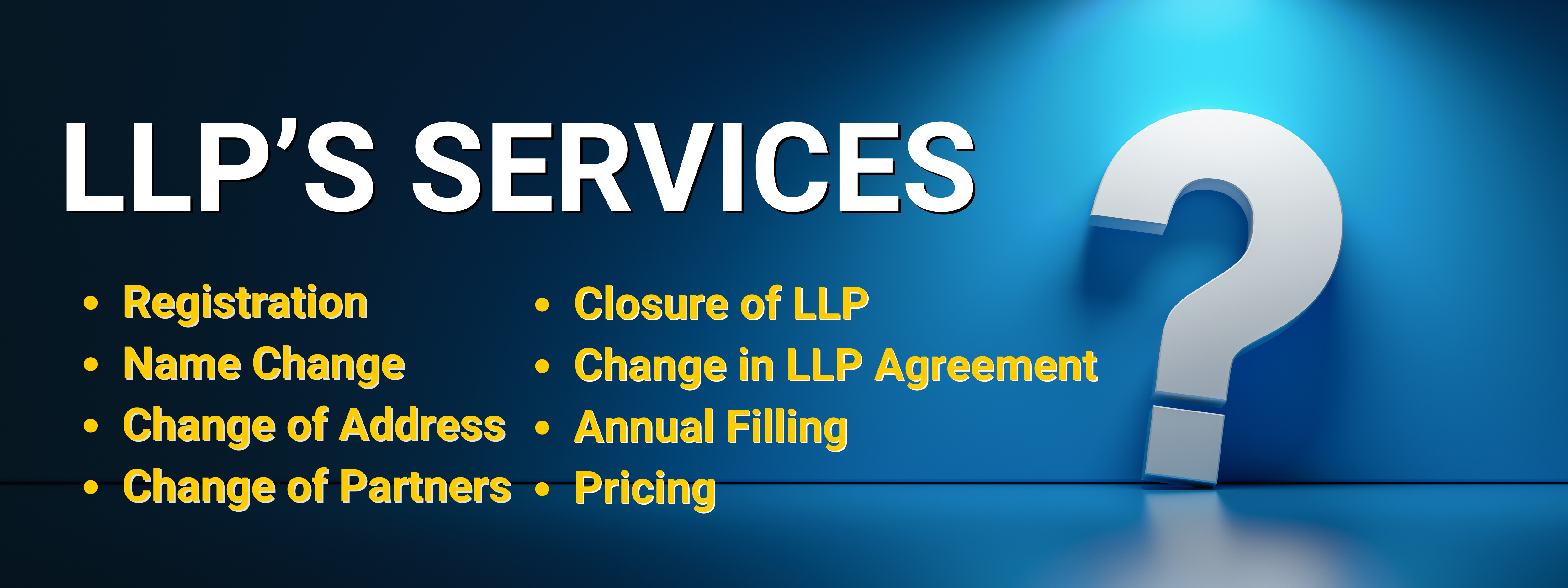

Our Services

ISO Registration :
The ISO certification is an international standard that defines good management practices. The certification aims at providing a global standard that spells out quality and trust. company or organization that has been independently audited and certified to be in conformance with ISO 9001 may publicly state that it is "ISO 9001 certified" or "ISO 9001 registered". Certification to an ISO 9001 standard does not guarantee any quality of end products and services; rather, it certifies that formalized business processes are being applied.
 
ISI Registration :
We provide with ISI certification services in which we help you achieve ISI certificate by improving you management system and thereby your quality standards. The Product Certification Scheme of BIS aims at providing Third Party Guarantee of quality, safety and reliability of products to the ultimate customer. Presence of ISI certification mark known as Standard Mark on a product is an assurance of conformity to the specifications. The conformity is ensured by regular surveillance of the licensee's performance by surprise inspections and testing of samples, drawn both from the market and factory.
 
Pvt. Ltd. Registration :

Company registration in India is regulated by the Companies Act, 1956 and is administered by the Ministry of Corporate Affairs (MCA - www.mca.gov.in) through the Offices of Registrar of Companies (ROC) in each State.
Company Registration process starts by filing of name application with the ROC. Once, name is allotted, company registration documents have to be prepared and filed with respective ROC for registration. Up on scrutiny of documents, in a day or two the ROC registers the Company and issue the Certificate of Incorporation.

 
Society (Societies Registration Act 1860) :
Societies Registration Act is a Central Act. However, ‘unincorporated literary, scientific, religious and other societies and associations’ is a State Subject (Entry 32 of List II of Seventh Schedule to Constitution, i.e. State List). Thus, normally, there should have been only State Laws on this subject. However, Societies Registration Act was passed in 1860, i.e. much before bifurcation of power between State and Centre was specified. Though the Act is still in force, it has been specifically repealed in many States and those States have their own Acts. Thus, practically, the Central Act is mainly of academic interest.
 
Trust (Indian Trust Act1882) :
A trust is an obligation annexed to the ownership of property and arising out of a confidence reposed in and accepted by the owner, or declared and accepted by him, for the benefit of another, or of another and the owner. [section 3 para 1]. The person who reposes the confidence is called 'author of trust' (testator), the person who accepts the confidence is called 'trustee' and the person for whose benefit the confidence is accepted is 'beneficiary'. The subject matter of trust is called 'trust property' or ‘trust-money. The ‘beneficial interest’ or ‘interest of the beneficiary’ is his right agai
 
Firm (Partnership / Proprietorship) :
We are a single platform offering our clients consultancy services, which help them to be registered as a partnership & proprietorship firm. These services are rendered by us considering the all rules and regulations prescribed by related acts. Our services are beneficial for the clients for getting the registration within short time period and without facing any kind of trouble.
 
NGO :
Non-governmental organization (NGO) is a term that has become widely accepted as referring to a legally constituted, non-governmental organization created by natural or legal persons with no participation or representation of any government. In the cases in which NGOs are funded totally or partially by governments, the NGO maintains its non-governmental status and excludes government representatives from membership in the organization. Unlike the term intergovernmental organization, "non-governmental organization" is a term in general use but is not a legal definition. In many jurisdictions these types of organization are defined as "civil society organizations" or referred to by other names.
 
RNI Number :
The Registrar of Newspapers for India (RNI) receives circulation data from the publications in the prescribed annual returns which is filed by the publishers on periodical basis.  The said circulation data is used by various Government departments, for example by DAVP for allotment of government advertisements and by RNI for allotment of quota for purchase/import of newsprint etc.  These returns/reports are to be certified by the auditors/Chartered Accountants of publisher.RNI now intends to carry out the sample verification of the circulation data submitted by the publishers from their own panel auditors (i.e. Chartered Accountants firms) to be appointed by RNI.  The objective of the said audit shall be to reconfirm the correctness and geniuses of the circulation data/figures submitted by the publications in their returns/report.
 
FCRA Certification :
Fair Credit Reporting Act (FCRA) describes this federal law that addresses the rights and obligations of four groups: Consumer reporting agencies; Users of consumer information; Furnishers of consumer information;Consumers. This course defines the key terms used in the Act, including permissible purposes, and provides an overview of the FACT Act. This course promotes discussions surrounding reporting and disclosure requirements
 
PAN ( NGO/ Trust/ Company/ Firms/ Individuals) :
Permanent Account Number (PAN)] from the Revenue Department. In addition to this, businesses liable to withhold tax must necessarily obtain a Tax Deduction Account Number (TAN). Both the PAN and the TAN must be indicated on all the returns, documents and correspondence filed with the Revenue Department. The PAN is also required to be stated in various other documents such as the documents pertaining to sale or purchase of any immovable property (exceeding Rs. five lakh), sale or purchase of a motor vehicle, time deposit (exceeding Rs. 5 lakh), contract for sale or purchase of securities (exceeding Rs. 10 lakh),.
 
Bar Code :
A barcode is an optical machine-readable representation of data, which shows certain data on certain products. Originally, barcodes represented data in the widths (lines) and the spacings of parallel lines, and may be referred to as linear or 1D (1 dimensional) barcodes or symbologies. They also come in patterns of squares, dots, hexagons and other geometric patterns within images termed 2D (2 dimensional) matrix codes or symbologies. Although 2D systems use symbols other than bars, they are generally referred to as barcodes as well. Barcodes can be read by optical scanners called barcode readers, or scanned from an image by special software
 
Egmark :
Agmark is a Certification system. Quality standards for agricultural commodities are framed based on their intrinsic quality. Food safety factors are being incorporated in the standards to complete in World trade. Standards are being harmonized with international standards keeping in view the WTO requirements. Certification of agricultural commodities is carried out for the benefit of producer/manufacturer and consumer. Certification of adulteration prone commodities viz. Butter, Ghee, Vegetable Oils, Ground-Spices, Honey, Wheat Atta etc. is very popular. Blended Edible Vegetable Oils and Fat Spread are compulsorily required to be certified under Agmark.
 
ESI :
The Employees’ State Insurance Scheme is administered by a corporate body called the Employees’ State Insurance Corporation (ESIC), which has members representing Employees, Employers, the Central Government, State Governments, Medical Profession and the Parliament. The Director General is the Chief Executive Officer of the Corporation and is also an ex-officio member of the Corporation. The other bodies at the national level are the Standing Committee (a representative body of the Corporation) and the Medical Benefit Council, a specialised body which advises the Corporation on administration of Medical Benefit.
 
Trademark, Copyright & Service mark :
A trademark is a distinctive sign or indicator used by an individual, business organization or other legal entity to identify that the products and/or services to consumers with which the trademark appears originate from a unique source of origin, and to distinguish its products or services from those of other entities. Copyright is a legal protection for the creator or "author" of a creative work. This protection allows the creator to control how the work is used and by whom.
 
Other Services :
  • Passport
  • Registration U/S 12-A of Inc. Tax Act
  • Registration U/S 80-G of Inc. Tax Act
  • Registration U/S 35 AC of Inc. Tax Act
  • Section 25 B Company (Non Profit Company)
  • Import- Export Code
  • Service Tax
 
  Copyright © nirman services.
Powered by Buck Softech Pvt. Ltd.